
Between 2022 and 2023, while I was sharing branding content on social media, I consistently emphasized one point: the way business is conducted has fundamentally changed over the last two decades. Even if you have the best products, the sharpest marketing strategies, and the most efficient sales funnels, you still might not have a competitive advantage. In the age of the internet and e-commerce, everything can be copied. Anyone can replicate your business model, your marketing tactics, or your sales strategies.
This was a pain point many brand owners felt deeply. I always told them the solution to this vulnerability is Branding. While competitors can copy what you do, they cannot copy who you are. When you invest in solid branding, the market notices. If a competitor tries to imitate you, the audience immediately recognizes it as a copy of your brand. This gives you a permanent advantage in the market, even before considering the legal protections branding provides.
The Challenge: The Invisible Ceiling
A business owner in the home furniture sector back in March 2023 reached out to me for help with his branding. He understood a difficult reality: you can do everything “right” in marketing and sales and still hit a revenue ceiling. As time passes, competition increases, and players begin fighting over price, often cutting margins until the business is running at a loss just to maintain a presence.
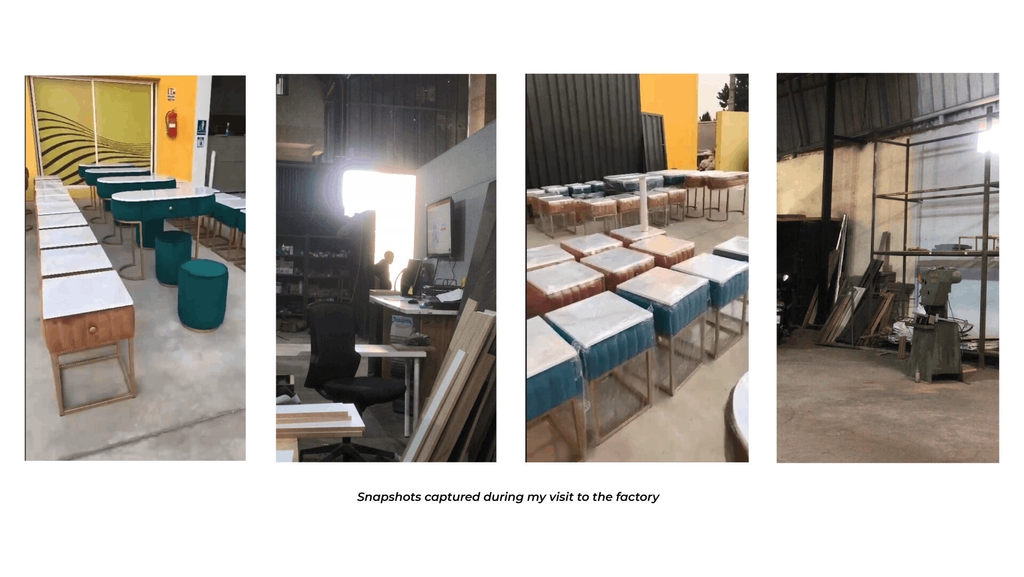
This client operated a 100% e-commerce, Direct-to-Consumer (D2C) brand. He had no showroom, only a factory where he manufactured his products and sold them directly via social media and his online store. He told me, “I am doing everything correctly, but my revenue is steadily dropping.” My answer was clear: branding was the missing piece of his puzzle.
Let’s Clear the Air: Branding is NOT Just a Logo
Before moving forward, we need to debunk a major myth. Most people hear “branding” and immediately think of design. That is a mistake.
Branding is anything that relates to how people trust your business, interact with you, and recommend you to others. This does not just apply to clients; it includes suppliers, investors, banks, and institutions. They will not trust you simply because you have a nice logo or pretty colors. They trust you because your business is solid from every angle, consistent, and professional from A to Z. That, in short, is the true essence of branding.
The Strategy: The Ferrari vs. The Civic
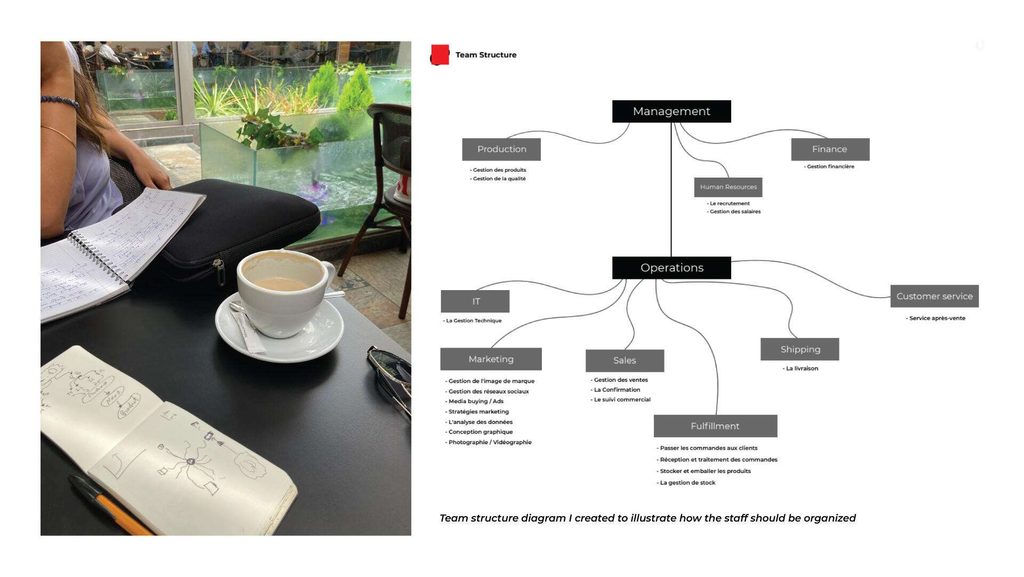
To begin, we held multiple strategy sessions to audit every aspect of his business, from production until the product reached the customer’s door. During these sessions, I noticed a significant issue: his staff was too small to support the sales numbers he wanted to achieve.
Many entrepreneurs fall into the trap of thinking that increasing revenue only requires more marketing effort or a bigger ad budget. This is false. If you want to scale sales, you must scale your team. More sales mean more orders to fulfill, more products to produce, more customer support tickets, and a need for more account managers to track logistics.
I told the client that I was confident we could quadruple his numbers by the end of the year, but only if he scaled his team alongside our strategy. He was hesitant to take that risk initially, but I knew that once the results started coming in, he would see the necessity.
Solving the Trust Gap
We began by building strategies to solve the brand’s core problems:
– High-Ticket Trust: Customers were hesitant to pay over 3,000dh upfront for large furniture items without a physical showroom.
– Product Perception: Customers were only buying small “bridge” products rather than the high-value items the business relied on.
– Retention: Previous customers were not returning or recommending the brand.
– Ad Dependency: The business stopped receiving orders the moment Meta Ads were turned off.
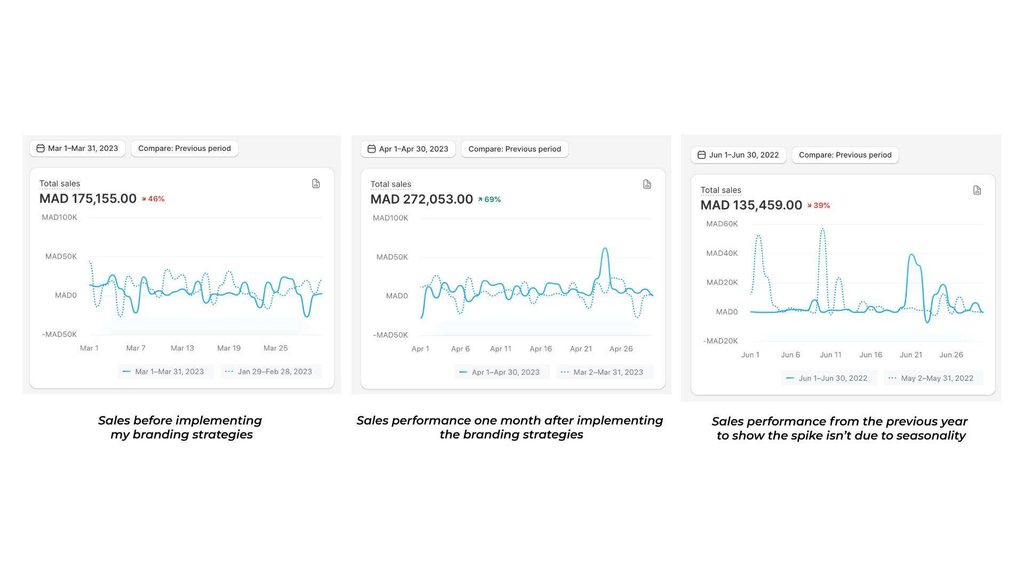
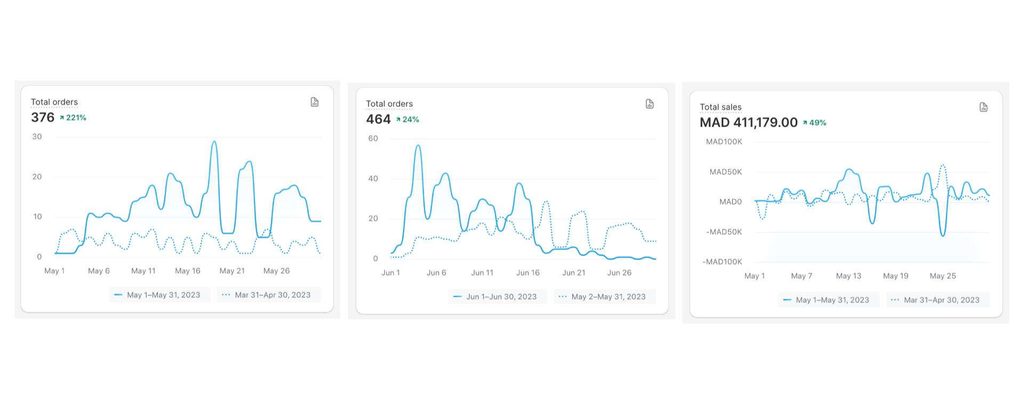
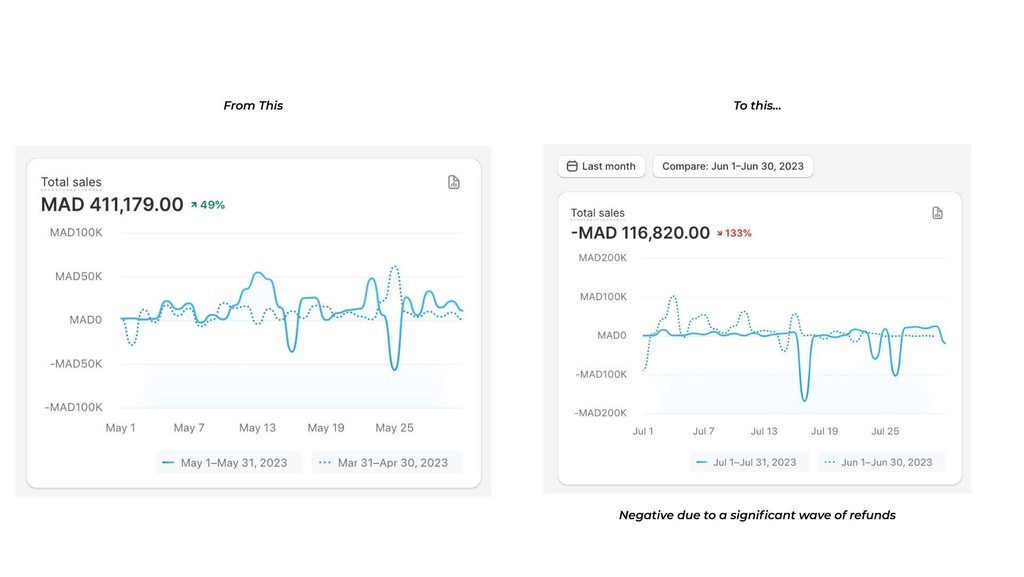
Within the first month of implementing these strategies, we saw immediate results. By the second month, those results had doubled again. This was not a seasonal fluke; a year-over-year comparison proved that our branding strategies were working.
The Direct Line: Collaborating with Meta Marketing Pros
Because Meta was the primary engine for growth, I chose to leave nothing to chance. To ensure our strategy was both brand-friendly and high-performing, I coordinated directly with the platform. I scheduled a consultation with a Meta Marketing Pro to audit our account structure and refine our creative approach.
During this session, we focused on aligning the artistic flair of the brand with the technical requirements of the Meta algorithm. This collaboration was key in preparing the account for the massive scaling we achieved in the following months. It ensured that our explosive growth was built on a technically sound foundation that prioritized both user experience and brand integrity.
Snippet from a meeting with the Meta agent responsible for the MENA region
The Hardest Decision: Walking Away
Everything was going perfectly, and I expected the owner to follow my recommendation to scale his staff. Instead, he refused to listen and continued to push for more growth because he saw the numbers climbing.
I had to stop and explain the looming danger. I told him that with more orders and less staff, shipping would be delayed, quality would drop, and the small team would burn out. I gave him a clear warning: “You cannot put a Ferrari engine inside the body of a Honda Civic. It might start, but it will blow up in your face eventually.”
When the results doubled again the following month and he still refused to hire help, I made the difficult decision to stop working with him. I cannot continue a project where the client refuses to help themselves.
The Prediction Comes True
Exactly what I predicted happened. The following month, the business was hit with a wave of refunds due to poor quality, at a level they had never seen before. Instead of tripling their results as he expected, the business crashed because of the operational bottlenecks I had warned him about.
It is deeply unfortunate when stubbornness gets in the way of success. Many entrepreneurs fail to see that a business is a complex machine; if you change one component, it affects the performance of the entire system.
As a branding specialist, I must understand this entire ecosystem. Before working on any strategy, I need to know what it takes to make it work perfectly without causing the whole structure to collapse. While I was proud that my work had such a massive impact in a short time, the success was cut short by a focus on only one part of the machine.
If you want to learn more about the specific strategies I used for this brand or view the detailed case study, please reach out to me privately. Due to privacy and NDA agreements, I cannot share further details publicly.